KiiChain anchors sovereign bank rails: Crypto plumbing captured
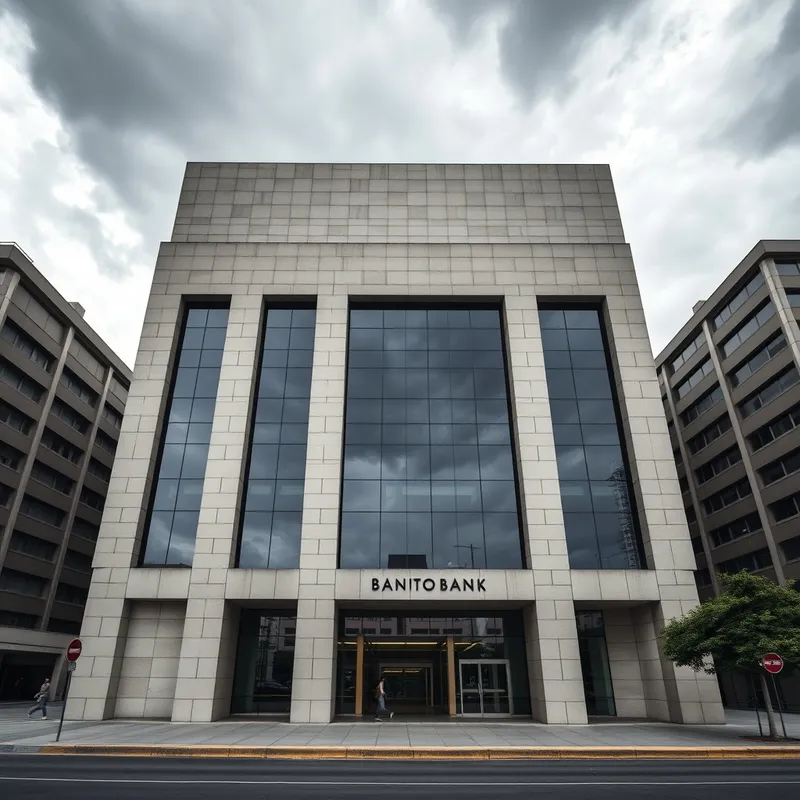
The Invisible Takeover: How Sovereign Banks Are Quietly Swallowing Crypto Plumbing
Sovereign banks are adopting blockchain rails to ensure public crypto never replaces them.

On September 9, 2026, Colombia's state-owned Banco Agrario and Financiera Juriscoop partnered with KiiChain, aiming for $10 million in daily FX volume under a network that has already processed over $500 million. This represents a structural shift where institutions strip blockchain of its speculative shell to upgrade legacy sovereign plumbing.
🌐 The Stealth Integration of State-Backed Liquidity
The integration of crypto-based settlement middleware into state-owned banking systems demonstrates that the battle for financial dominance is no longer about retail wallet adoption. Instead, a quiet institutional capture is occurring at the protocol level. Regulated financial institutions are choosing to deploy blockchain technology as an invisible backend utility rather than exposing their clientele to digital assets directly.
Foreign exchange settlement relies on a complex web of intermediary banks that charge high fees to move capital across borders. In this context, decentralized settlement networks act as instant digital bridges. By sitting beneath existing treasury operations, these networks allow institutions to maintain their custody moats and compliance protocols while capturing the efficiency of twenty-four-seven settlement.

"The ultimate triumph of blockchain technology is its complete invisibility to the end user."
What this signals is a decoupling of blockchain utility from token price speculation. Legacy institutions do not need to hold volatile crypto assets to benefit from cryptographic rails. By utilizing private request-for-quote systems, they lock in local fiat exchange rates before transaction execution, eliminating the price volatility that has historically kept institutional treasury desks on the sidelines.
🏛️ Anatomy of a Sovereign Liquidity Shield: The 1997 Asian Financial Crisis Playbook
This migration toward closed, state-sanctioned settlement rails mirrors previous historical attempts by sovereign nations to insulate their local economies from external capital shocks. During the 1997 Asian Financial Crisis, emerging markets suffered devastating capital flight because traditional correspondent banking networks and offshore clearing houses could withdraw dollar liquidity instantly. This left domestic banking systems highly vulnerable to external macroeconomic pressures.
In my view, the adoption of localized, always-on atomic settlement networks by emerging market banks is a modern defense mechanism. By anchoring foreign exchange settlement inside domestic cryptographic rails, sovereign entities are building a digital firewall against the traditional offshore correspondent banking system. Today's structural shift is not about embracing open-source decentralization; it is about utilizing private blockchain architecture to protect national liquidity from external shocks.

| Competing Force | The Irreconcilable Friction |
|---|---|
| Sovereign Treasuries (Centralized Custody) vs DeFi Protocols (Permissionless Liquidity) | Sacrificing open-source decentralization to maintain absolute state control over domestic capital flight. |
| State-Owned Banks (Legacy Compliance) vs Always-On FX Rails (Instant Settlement) | Reconciling instant cryptographic execution with slow, manual regulatory oversight windows. |
⚡ The Microstructure Shift in Emerging Market FX
As these friction points highlight, the transition from legacy settlement to real-time cryptographic networks alters the very microstructure of foreign exchange. The traditional system relies on delayed settlement cycles, which introduce significant counterparty risk. By utilizing cryptographically signed, time-bound quotes, liquidity providers can guarantee execution terms without exposing themselves to intermediate market movements.
Herstatt risk is the danger that one party in a foreign exchange transaction will deliver their currency but the other party will fail to deliver theirs due to timezone differences. Cryptographic atomic settlement eliminates this by ensuring both transfers happen simultaneously or not at all. This structural upgrade allows smaller regional institutions to bypass global clearing houses entirely, leveling the playing field for emerging market liquidity.
"Sovereign nations are not adopting crypto to join a global commons; they are adopting it to build digital fortresses."
Strip away the noise and it becomes clear that the integration of major stablecoin networks into these sovereign rails creates a dual-layer financial system. The public sees familiar fiat interfaces and standard bank ledgers, while underneath, tokenized dollars and local currencies settle instantly across decentralized ledgers. This hybrid model successfully bridges institutional compliance with web3 efficiency.

🔮 The Institutional Re-routing of Global Remittances
The structural transformation of local foreign exchange markets inevitably spills over into the broader global remittance corridors that feed these emerging economies. As regional banking networks integrate these backend rails, the reliance on legacy payment networks will decline. This shifts the competitive landscape, forcing traditional remittance giants to either adapt to blockchain-based middleware or lose market share.
The regulatory environment is likely to adapt by licensing these specialized infrastructure providers rather than trying to police decentralized protocols directly. Regulators will focus their oversight on the gateway points where fiat liquidity is tokenized and redeemed. For investors, this means the most sustainable value capture lies in the middleware protocols that facilitate this institutional transition, rather than in highly speculative consumer-facing applications.
The integration of state-owned banking networks into private cryptographic rails signals a permanent departure from the retail-driven crypto narratives of the past. The real institutional adoption of blockchain is occurring as an invisible system upgrade, completely separated from public token speculation. As emerging market banks continue to build these digital firewalls, the traditional correspondent banking system will face an existential liquidity squeeze.
⚖️ Atomic Settlement: A transaction mechanism where the transfer of one asset occurs if and only if the transfer of the counterparty asset is successfully completed, eliminating default risk.
⚖️ Herstatt Risk: The risk that a foreign exchange transaction fails to settle because of timezone differences, where one party pays out but the other defaults before delivering.
⚖️ Request-for-Quote (RFQ): A standard financial process where an institution solicits pricing quotes from liquidity providers before executing a trade, now modernized via cryptographic signatures.
- If state-owned bank transaction volume on public middleware drops below projected baselines → this signals a retreat to traditional SWIFT rails.
- If regulatory bodies mandate centralized blacklists on atomic settlement contracts → the utility of permissionless validator networks faces severe degradation.
- If the spread between on-chain institutional FX quotes and traditional spot rates widens → arbitrage opportunities will migrate to private OTC desks.
— — coin24.news Editorial
This analysis is synthesized from aggregated market data and institutional research insights. It is provided for informational purposes only and should not be construed as financial advice. Cryptocurrency investments carry high risk; please conduct your own due diligence before making any investment decisions.
Related Intelligence

Central banks bypass Bitcoin reserves: The Reserve Facade

Euro strength masks Bitcoin reality: The DXY Liquidity Facade

Lagging inflation data traps Bitcoin: The 100 Oil Undertow

US bond crash reshapes global finance: The Death of Cheap Money

Cardano scaling faces revenue decay: The Staking Revenue Drag