Central banks bypass Bitcoin reserves: The Reserve Facade

The Sovereign Dollar Illusion: Why De-Dollarization Is Not a Bitcoin Buy Signal
The world's central banks are quietly ditching dollar dominance without touching a single Satoshi.
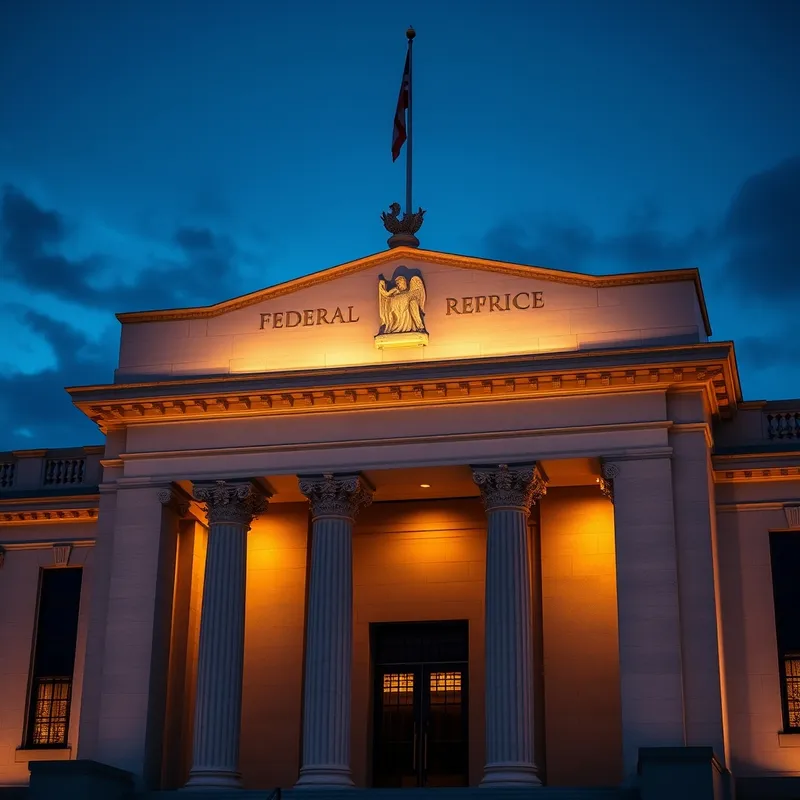
For years, crypto analysts have sold a simple, enticing narrative: as global central banks reduce their dependence on the U.S. dollar, that fleeing capital will naturally find a home in sovereign Bitcoin reserves. Fresh macroeconomic data completely dismantles this institutional fantasy. The global transition away from dollar assets is not a coordinated flight to scarce digital assets, but an administrative artifact of mathematical rebalancing and localized liquidity management.
A statistical reality check exposes the mechanics behind these central bank reserves. Data reveals that the greenback's share of global official foreign-exchange reserves shrank from 64% at the close of 2015 down to 56% by year-end 2025. While market commentators interpret this 8% drop as a systemic rejection of fiat dominance, granular IMF COFER tracking demonstrates that much of this variance stems from weight changes rather than structural shifts in central bank preference.
📊 Mathematical Illusions and the De-Dollarization Myth
To evaluate how capital moves at the sovereign level, one must understand how foreign-exchange accounting operates. When central banks alter their reserves, two distinct forces are at play: actual asset reallocations driven by policy preference, and pure size effects driven by macro expansion. When a nation holding a low baseline percentage of greenbacks rapidly expands its balance sheet, the global mathematical average of dollar holdings drops automatically—even if that nation did not sell a single greenback.
Between 2015 and 2019, reserve tracking across 76 reporting nations showed that active portfolio preference shifts accounted for a mere 1.2 percentage point decline in global dollar share. In contrast, balance sheet expansion from low-dollar nations diluted the total by 1.5 percentage points. Switzerland provided a classic example of this mechanic: its massive reserve expansion pulled down the global aggregate dollar percentage while its internal allocation to U.S. assets actually increased.

"A shrinking dollar reserve ratio is a mathematical outcome of balance sheet expansion, not a vote of confidence in decentralized money."
This dynamic solidified further between 2019 and 2023 across 62 tracking nations. During this window, active preference shifts contributed a positive 0.3 percentage points back into greenback exposure, while size mechanics dragged the total down by 0.5 percentage points. Key non-reporting nations including China, Russia, Mexico, and Morocco left gaps in precise 2023 reporting, but analytical models accounting for the 2.3 percentage point drop in that period attribute a combined negative 2.0 percentage points to preference changes within that specific unmapped group.
🏦 The Separation of Liquidity Needs and Capital Allocation
Because mathematical rebalancing explains the shifting reserve aggregate, interpreting de-dollarization requires understanding how central banks divide their balance sheets. Sovereign funds do not treat reserves as a single pool of speculative wealth. Instead, central banks segment balance sheets strictly between baseline liquidity needs and excess investment tranches.
Liquid reserves are constrained by rigid operational demands: servicing short-term external debt, stabilizing national currency fluctuations, and maintaining at least three months of import cover. A sovereign portfolio cannot allocate capital into volatile, non-yield assets like Bitcoin until these foundational liquidity requirements are met. The capacity to diversify into non-traditional instruments only exists within the surplus tranche above this debt and trade safety floor.
When central banks do experiment with digital assets, they deliberately isolate those allocations outside their official reserves. On November 13, 2025, the Czech National Bank created a modest $1 million test portfolio composed of digital assets, including Bitcoin, a dollar-pegged stablecoin, and a tokenized deposit. Crucially, monetary authorities framed this capital as a ring-fenced operational experiment, strictly separating it from the nation's official international reserve management framework.

"Central banks build playgrounds for crypto experiments, but they keep the sandbox far away from their balance sheet bedrock."
What this signals is that sovereign crypto integration remains far more nuanced than simple buy orders on an exchange. Without direct regulatory disclosures detailing explicit funding lines and execution mechanisms, assuming that dollar reserve contraction equals Bitcoin accumulation is wishful thinking. In my view, conflating administrative currency dilution with sovereign crypto adoption is the primary analytical mistake investors are making today.
🏛️ Institutional Risk Transfer: Structural Lessons from the Gold Standard Unwind
Given that central bank balance sheets prioritize liquidity over speculative diversification, current market assumptions around sovereign crypto adoption mirror past structural transformations in traditional reserve assets.
To evaluate how central banks manage structural reserve shifts, look to the historical mechanics of the 1971 London Gold Pool dissolution. When global monetary authorities were forced to break the explicit peg between the U.S. dollar and physical gold, institutional markets assumed central banks would immediately liquidate their dollars to hoarded bullion. Instead, central bank risk managers prioritized short-term debt settlement and international liquidity above asset backing, holding dollars out of operational necessity while slowly constructing modern foreign-exchange reserves over several decades.
Today's market displays a strikingly identical structural conflict. While crypto enthusiasts anticipate a rapid capital migration into hard digital assets, sovereign risk managers operate under strict liquidity mandates. In my view, the market is misinterpreting administrative currency rebalancing as an active portfolio exit—repeating the exact analytical mistake made during the post-Bretton Woods restructuring.

| Competing Force | The Irreconcilable Friction |
|---|---|
| Central Bank Reserve Managers | Prioritizing immediate trade coverage over long-term asset purchasing power protection. |
| 🏛️ Digital Asset Institutional Thesis | Expecting volatile, unpegged assets to satisfy strict sovereign liquidity mandates. |
🔮 Sovereign Balance Sheets and the Bitcoin Reality Gap
The reality of sovereign reserve management means that macro de-dollarization will manifest as a multi-tier reallocation process rather than an immediate crypto influx. Expect central banks to exhaust traditional alternative currencies, gold reserves, and tokenized settlement rails before committing capital to unpegged digital assets.
In the medium term, sovereign crypto adoption will remain restricted to isolated policy sandboxes or sovereign wealth vehicles rather than primary foreign-exchange reserves. Institutional capital flows into Bitcoin will continue to depend on private asset managers and corporate treasury deployments rather than central bank balance sheets.
⚖️ COFER (Currency Composition of Official Foreign Exchange Reserves): An IMF database tracking the quarterly breakdown of foreign exchange reserve currencies held by official monetary institutions globally.
⚖️ Liquidity Baseline: The threshold of immediate, highly liquid foreign assets a central bank must retain to cover short-term import obligations, foreign debt service, and currency intervention.
- If central bank gold purchases accelerate alongside dollar reserve declines → this signals defensive reallocations strictly within traditional legacy assets.
- If national import cover metrics fall below 90 days across emerging markets → this triggers capital preservation moves away from non-fiat assets.
- If official central bank balance sheet disclosures explicitly add unencumbered digital assets → this signals a structural regime shift toward sovereign adoption.
— — coin24.news Editorial
This analysis is synthesized from aggregated market data and institutional research insights. It is provided for informational purposes only and should not be construed as financial advice. Cryptocurrency investments carry high risk; please conduct your own due diligence before making any investment decisions.
Related Intelligence

Liquid exploit exposes systemic risk: Federated Custody Illusion

Higher Fed Rates Choke Bitcoin Yield: Liquidity Drain Through December

Hunter Biden Launches Token: Political satire masks deep market liquidity extraction.

US bond crash reshapes global finance: The Death of Cheap Money

Zoomex stock perpetuals lure traders: Synthetic Liquidity Facade