Druckenmiller acquires power grids: The AI Power Arbitrage Play
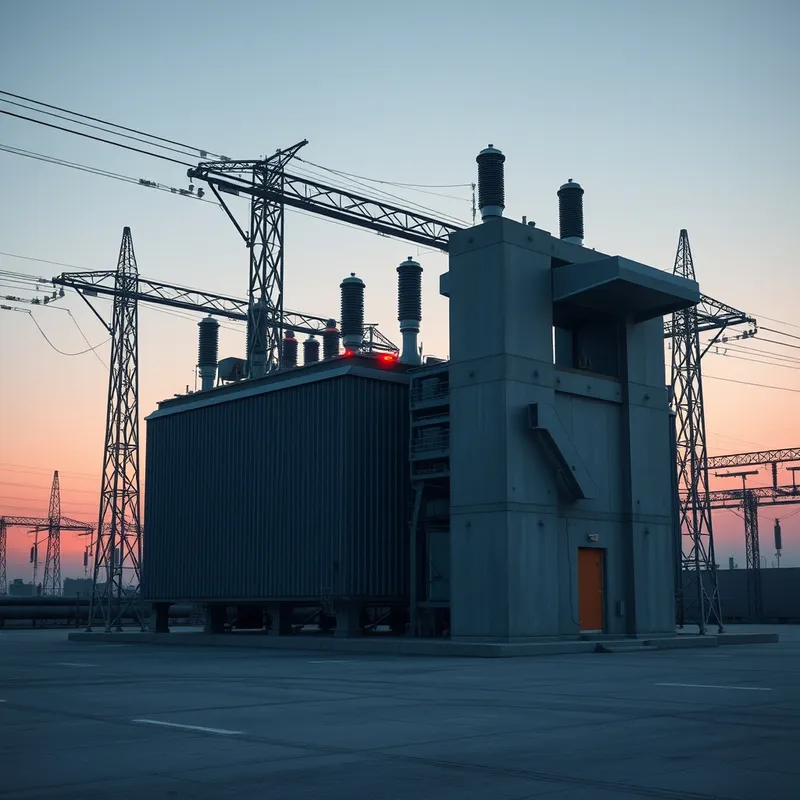
The Energy Arbitrage Pivot: Why Wall Street Macro Capital Is Buying Grid Interconnects, Not Tokens
Wall Street’s sharpest macro minds are shorting digital scarcity to long physical megawatt infrastructure.

Institutional capital allocations are shifting away from pure digital store-of-value plays toward foundational power delivery vectors. Capital flows show elite portfolio managers exiting traditional semiconductor equities to capture underpriced grid access through digital asset infrastructure.
🔌 The Institutional Migration to Megawatts Over Tokens
In mid-August, filings revealed that Duquesne Family Office, managed by veteran investor Stanley Druckenmiller, allocated $125.6 million across major digital asset computational operators. The total allocation represents roughly 2.4% of a overall $5.21 billion portfolio, reflecting a deliberate pivot toward energy assets.
The position breakdown exposed strategic diversification across key power footprint owners: $64.7 million in Bitdeer Technologies, $36.3 million in Hut 8, $20.7 million in Riot Platforms, and $4.0 million in IREN. Rather than targeting spot digital assets or exchange-traded vehicles, the capital targeted energized grid interconnects.

"Power grid access is the ultimate bottleneck of the compute age."
⚡ Reprogramming Hashrate for High-Performance Compute
Building on this institutional capital deployment, the operational pivot relies on a core bottleneck in modern technology: utility interconnect queues. Securing a massive power interconnection now takes multiple years, leaving compute clusters starved for immediate megawatt capacity.
To capture this spread, Bitdeer executed a $4.7 billion, 16-year deal with Volta covering a Norwegian site equipped with high-density chips for advanced compute processing. Similar operational retoolings across operators prove that legacy facility infrastructure is being repurposed for enterprise AI infrastructure demands.
Concurrently, equity positions in legacy semiconductor manufacturers were trimmed to finance these infrastructure bets, even as core positions like Taiwan Semiconductor were expanded to $281.6 million. The strategic intent focuses on securing the full supply chain: from chip production to physical power delivery.

🏭 The 19th-Century Rail Land-Grant Playbook
This structural repositioning parallels the 19th-century American transcontinental railroad expansions. In the 1860s, clever capital did not merely invest in steam locomotive manufacturers; it acquired rights-of-way and adjacent land grants. The underlying rail line provided volatile baseline earnings, but the true wealth generation derived from controlling physical logistics corridors that future enterprise relied upon.
Today, power grid interconnects function as the digital land grants of the modern economy. Institutional capital accepts temporary equity weakness across infrastructure operators because the underlying power rights represent non-replicable strategic real estate for high-density compute applications.
| Competing Force | The Irreconcilable Friction |
|---|---|
| 🆙 Pure-Play Hashrate (Proof-of-Work Loyalty) vs. Data Center Conversions (Enterprise Compute) | 🆙 Sacrificing native block reward exposure for stable enterprise HPC lease yields. |
| Spot Asset Allocation (Digital Scarcity) vs. Infrastructure Equity (Physical Power Rights) | 🔁 Trading frictionless asset upside for illiquid, capital-intensive grid interconnections. |
📊 Divergence Mechanics and Market Mispricing
Following this infrastructure shift, market pricing highlights a sharp temporal divergence between spot assets and compute equities. Since mid-year, the underlying digital commodity rallied roughly 33%, moving from roughly $58,600 to trade well above $81,000.
Conversely, equity markets severely repriced infrastructure operators downward over the same horizon. Publicly traded operators registered sharp drawdowns, with Bitdeer dropping 25.5%, Hut 8 declining 24.4%, Riot falling 24.3%, and IREN slipping 10.0%, creating an aggregate paper decline of approximately $30.7 million on the initial allocation.
"Public markets price quarterly operational drag while private capital buys multi-decade power rights."
This valuation gap stems from short-term squeezed operational margins, as evidenced by recent sector-wide quarterly operational losses. However, the market misprices these assets by evaluating them strictly through legacy token economics rather than long-term infrastructure leases.
The current equity drawdown presents a distinct strategic disconnect. Market valuations will likely re-rate infrastructure operators as enterprise power access bottlenecks intensify over the next 18 to 36 months. Investors evaluating this space must separate network hash-rate dynamics from physical utility infrastructure value.
⚡ Grid Interconnect: The physical and legal connection point between an energy generation facility or large-scale consumer and the high-voltage electrical transmission grid.
💻 HPC (High-Performance Compute): Advanced computational processing setups used for artificial intelligence models and enterprise data analytics that require immense power density.
- If enterprise AI lease announcements exceed 40% of total megawatt capacity → expect institutional multiple expansion.
- If power interconnect regulatory delays exceed 24 months nationally → existing energized sites gain substantial valuation premiums.
- If spot network hash price drops below operating expenditure thresholds → operational conversion to HPC accelerates rapidly.
— — coin24.news Editorial
This analysis is synthesized from aggregated market data and institutional research insights. It is provided for informational purposes only and should not be construed as financial advice. Cryptocurrency investments carry high risk; please conduct your own due diligence before making any investment decisions.
Related Intelligence

Bitcoin battles macro liquidity trap: The 90 Dollar Oil Drag

BingX outpaces TradFi market depth: A Silent Liquidity Takeover

Wall Street captures Binance platform: The TradFi Enclosure

Solana governance exposes power play: The Governance Illusion

Revolut exposes US bank gatekeepers: The Trust Charter Illusion